Tag: pollinator garden

  • What the Hell Did I Plant Here?

    What the Hell Did I Plant Here?

    Last autumn, I planted some native plant seeds because apparently there is a thing called cold stratification.

    Say that ten times.

    Cold. Stratification.

    Basically, some native plant seeds need a period of cold before they can germinate. Mother Nature apparently decided that simply being a seed wasn’t enough. They needed to spend some time freezing their little seed butts off first.

    So, being frugal here, I swapped some seeds with other people instead of going out and buying a bunch. I made sure those seeds were in the ground before the first frost of the year.

    Perfect.

    I had a plan.

    Well… sort of.

    If you’ve ever seen some native plant seeds, you know how ridiculously tiny they can be. We’re talking minute. Trying to space them properly is almost impossible. And because I didn’t have a whole lot of each variety to begin with, I figured I’d just scatter them where I wanted them and call it good.

    And then there was my second mistake.

    I thought, “I’ll remember what I planted.”

    I mean, come on. There weren’t that many seeds.

    I knew what I planted.

    I knew where I planted them.

    I would obviously remember.

    Pfft.

    So there I was, happily sowing my tiny little native plant seeds into the ground, completely unconcerned about labeling anything.

    Because why would I need labels?

    I was going to remember.

    Sure.

    And Then Spring Happened

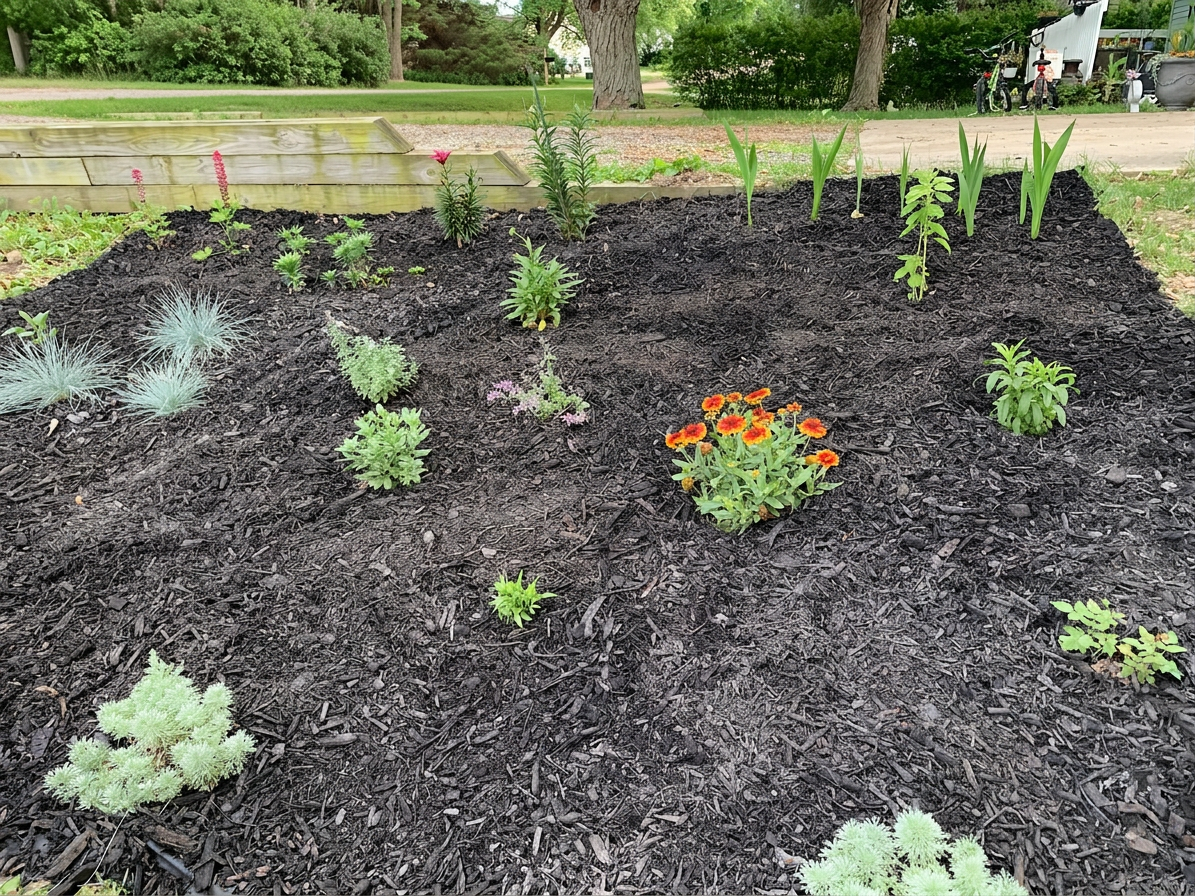
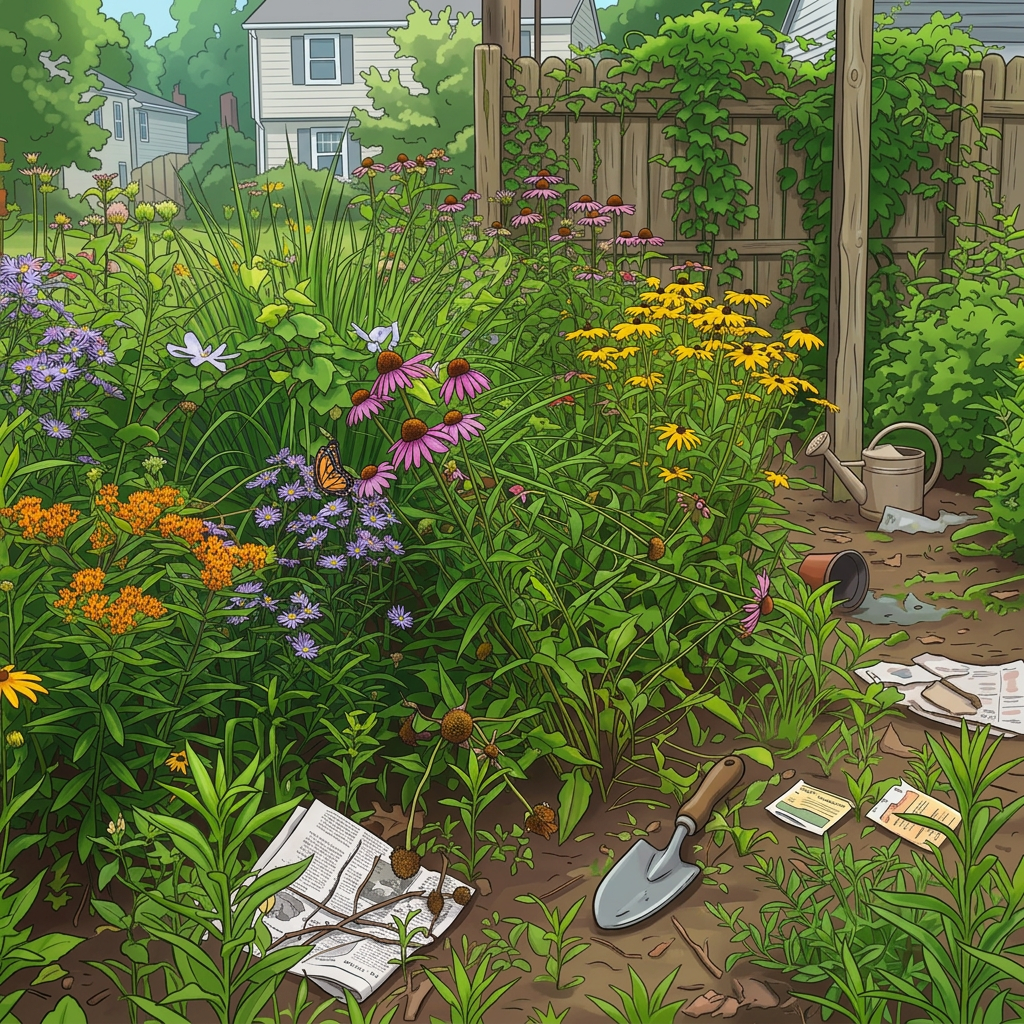
    So here I am, looking at the space where I planted my seeds.

    Some were sprouting.

    Some weren’t.

    Which meant that, at first, my flower bed had these weird little bald spots where absolutely nothing seemed to be happening.

    Then the weather finally stayed consistently warm enough for me to clean up all the dried leaves from the previous season.

    And that’s when I started seeing more little plants popping up.

    Okay!

    We’re growing!

    Except…

    I stood there looking at the flower bed and thought:

    “Are these weeds, or are these the native plants I planted?”

    I had zero idea.

    Everything was coming up at once.

    There were tiny little plants everywhere, and I couldn’t tell which ones I had intentionally put there and which ones had apparently decided to move into my flower bed without paying rent.

    So I did what any responsible gardener would do.

    I left them all alone.

    😂

    I wasn’t about to pull out a perfectly good native plant just because I couldn’t remember what it looked like.

    So I watered them. I took care of them. I watched them.

    Basically, I became a responsible gardener to a group of plants whose identities I could not confirm.

    And then things got even more interesting.

    Because every so often, another plant would just shoot up.

    And I’d look at it and think…

    “What are you?”

    Were you here last year?

    Did I plant you?

    Did you just decide to show up?

    I honestly couldn’t remember seeing some of these plants being this big last year.

    And then one day, I’d look at something that was already ridiculously tall and think:

    “Like, what the heck, dude? It’s spring and you’re already as tall as me! WHAT ARE YOU?”

    At this point, my garden had basically become a mystery box.

    I planted native seeds.

    I apparently planted some things I remembered.

    I apparently planted some things I didn’t remember.

    And there were definitely some things growing that I was pretty sure I didn’t plant.

    Which brings me to the problem I had created for myself:

    I had absolutely no idea what I planted here.

    And Then Summer Happened

    So summer rolled around.

    And some of them were already blooming.

    FINALLY.

    And suddenly, I started remembering.

    “Oh! I know what you are!”

    That one had orange flowers. I remember you!

    And that one had yellow flowers!

    Ohhh, yeah. You’re a coneflower! I remember you now!

    It was like my garden was slowly handing me the answers to a test I had apparently forgotten studying for.

    But there were still some plants in there that I couldn’t quite figure out.

    Because, duh…

    They hadn’t bloomed yet.

    It’s summer, hello!

    Are you just going to grow and grow and grow and not bloom at all?!

    What exactly is your plan here?

    Your brothers and sisters are out there doing their thing, blooming, attracting bees and butterflies, feeding the bugs like they’re supposed to…

    And you’re just standing there.

    Growing.

    Taking up space.

    Getting taller.

    Doing absolutely nothing helpful for my memory.

    WHAT ARE YOU?!

    So, like any responsible gardener who has completely lost track of what she planted, I turned to Google.

    I took pictures.

    I uploaded them.

    And basically asked:

    “What is this?”

    Google came back with:

    Maybe an early sunflower?

    Okay.

    Maybe.

    And again:

    What is this?

    Looks like an aster.

    Okay… maybe.

    And that’s when I realized that I had somehow managed to create a garden where I was not entirely sure what was growing in it.

    But here’s the thing.

    I didn’t hate it.

    Actually, I kind of loved it.

    Because instead of knowing exactly what was going to happen, I had to wait.

    I had to watch.

    I had to see what grew, what bloomed, what attracted bugs, and what turned out to be something I had completely forgotten I planted.

    Every new flower became a little reunion.

    “Oh! I remember you!”

    And every plant that hadn’t bloomed yet?

    Well…

    You and I were still going to have a conversation.

    And Now We’re Nearly in Autumn

    And now we’re nearly in autumn.

    Some are still blooming.

    Some have already lost their blooms.

    Some were completely devoured by the bugs—which, honestly, is exactly what I wanted to happen.

    Some are still in the process of blooming, taking their sweet time while I stand there wondering when they’re finally going to show me what they are.

    And apparently…

    I planted a whole bunch of asters.

    Yes.

    That’s what they are.

    Now that they’ve finally started showing themselves, I can recognize them.

    Of course I can.

    Where was this knowledge when I needed it in the spring?!

    Don’t get me wrong. There are still plants out there that I have absolutely no idea what they are.

    And you know what?

    I’m okay with that.

    They’re growing.

    They’re blooming when they’re ready.

    They’re getting eaten by bugs.

    They’re attracting pollinators.

    They’re becoming part of the little ecosystem I’ve been trying to create in my garden.

    So I leave them alone.

    I don’t need to know the name of every single plant growing in my flower bed.

    Apparently, I just need to know enough to know when not to pull it out.

    And maybe that’s the funny thing about this whole experiment.

    I started with a bunch of tiny seeds, a vague memory of where I planted them, and an unreasonable amount of confidence that I would remember what everything was.

    I didn’t.

    Not even close.

    But somehow, it worked.

    The plants came up.

    Some I recognized immediately.

    Some took months to introduce themselves.

    Some required Google.

    And some are still keeping their identities a secret.

    But they’re all doing something.

    They’re growing. They’re blooming. They’re feeding the bugs. They’re attracting pollinators. They’re filling in those bald spots I worried about in the spring.

    And next year?

    I’ll probably label everything.

    Probably.

    No, not really. I know myself. I won’t label them.

    Because then, next spring, I get to experience the exact same kind of chaos all over again.

    No growth. No lesson learned. Just flowers.😂
  • It All Started with Milkweed

    It All Started with Milkweed

    I read that monarchs need milkweed to lay their eggs on. So I started researching milkweed—and, oh boy! There are tons of varieties!

    I went to our local garden centers with an idea of what kind of milkweed I wanted, only to find out that they didn’t carry nearly as much variety as what I had found on the Internet. They had common milkweed and butterfly weed, so that’s what I got.

    Did I have any idea where I wanted to plant them?

    No.

    Looking back, I probably should have planned where to plant them first. Oops!

    So here I was, thinking that I would have to create another flower bed specifically for native plants. Off to the garden centers I went to get garden soil.

    I already had plenty of cardboard boxes from my Amazon deliveries (heh!), so I decided to put those to good use.

    I laid down the cardboard, then added sticks and tons of dried leaves. I watered everything down, added some more dried leaves, and then topped it all with garden soil.

    I’m not an expert, and I had read somewhere that this was a way to create a flower bed without tilling. Some people suggested adding compost as well, but I just worked with what I had at the time.

    Then came the milkweed and butterfly weed.

    And then I waited…

    And waited some more.

    I didn’t see any monarchs at all.

    My new native plants were taking off, and the perennials in my other flower bed were blooming, but there were no monarchs.

    I thought maybe it would just take some time. Perhaps I would have to wait until next year.

    Oh well.

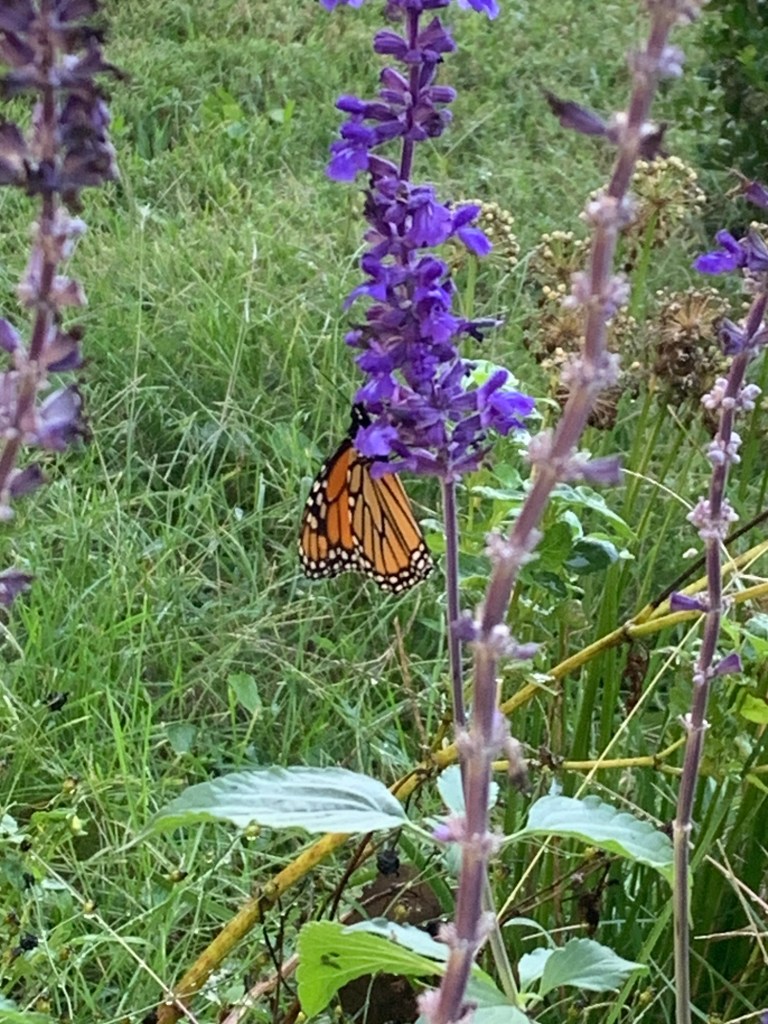
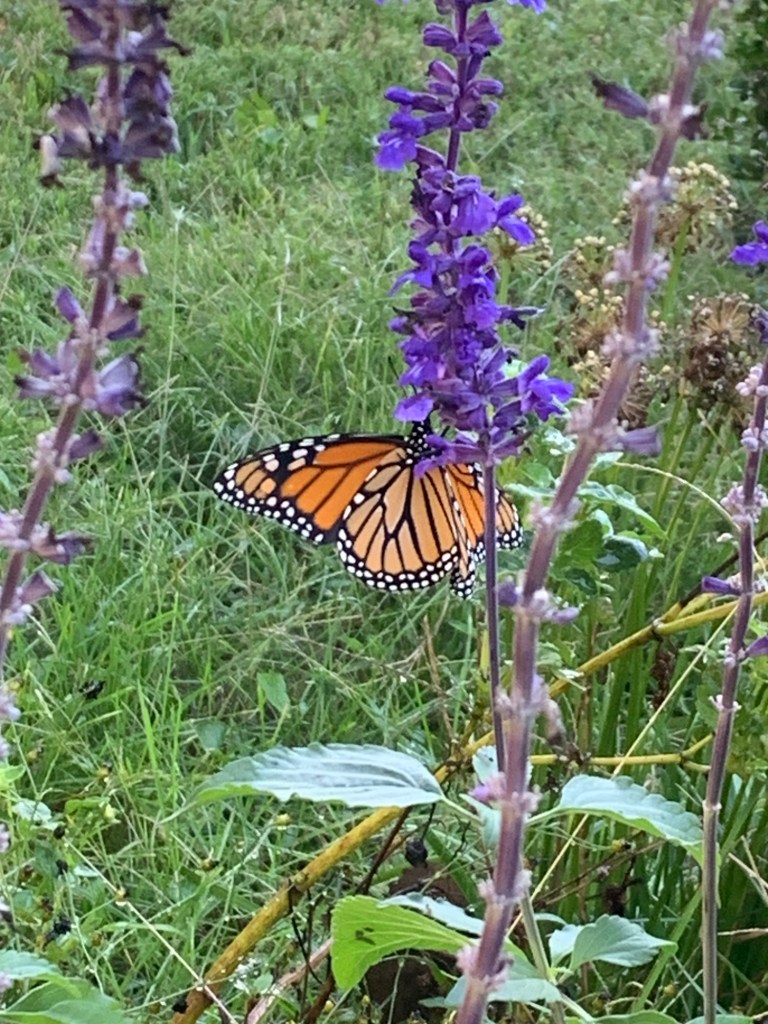
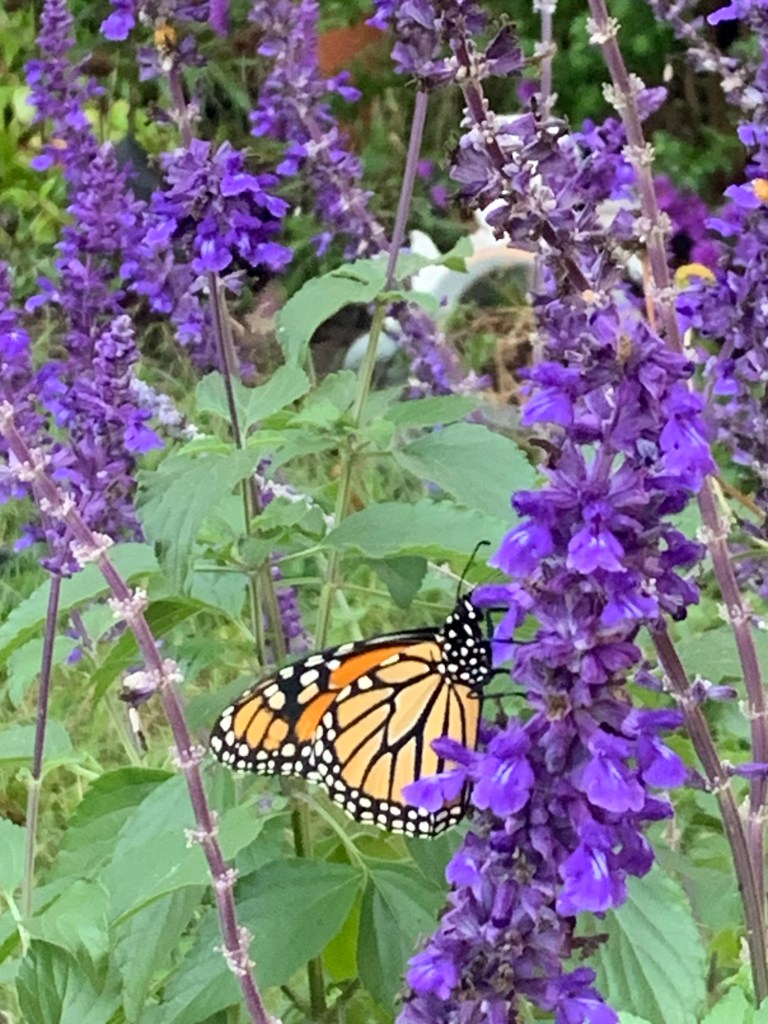
    Then, one afternoon after work, I was pulling into our driveway when I saw one.

    A monarch.

    In my garden!!!

    I was so excited that I actually stopped my car, shut off the engine, and got out.

    There was a monarch in my garden! How exciting is this?!?!

    And then I saw another one.

    I’m in heaven!

    But wait…

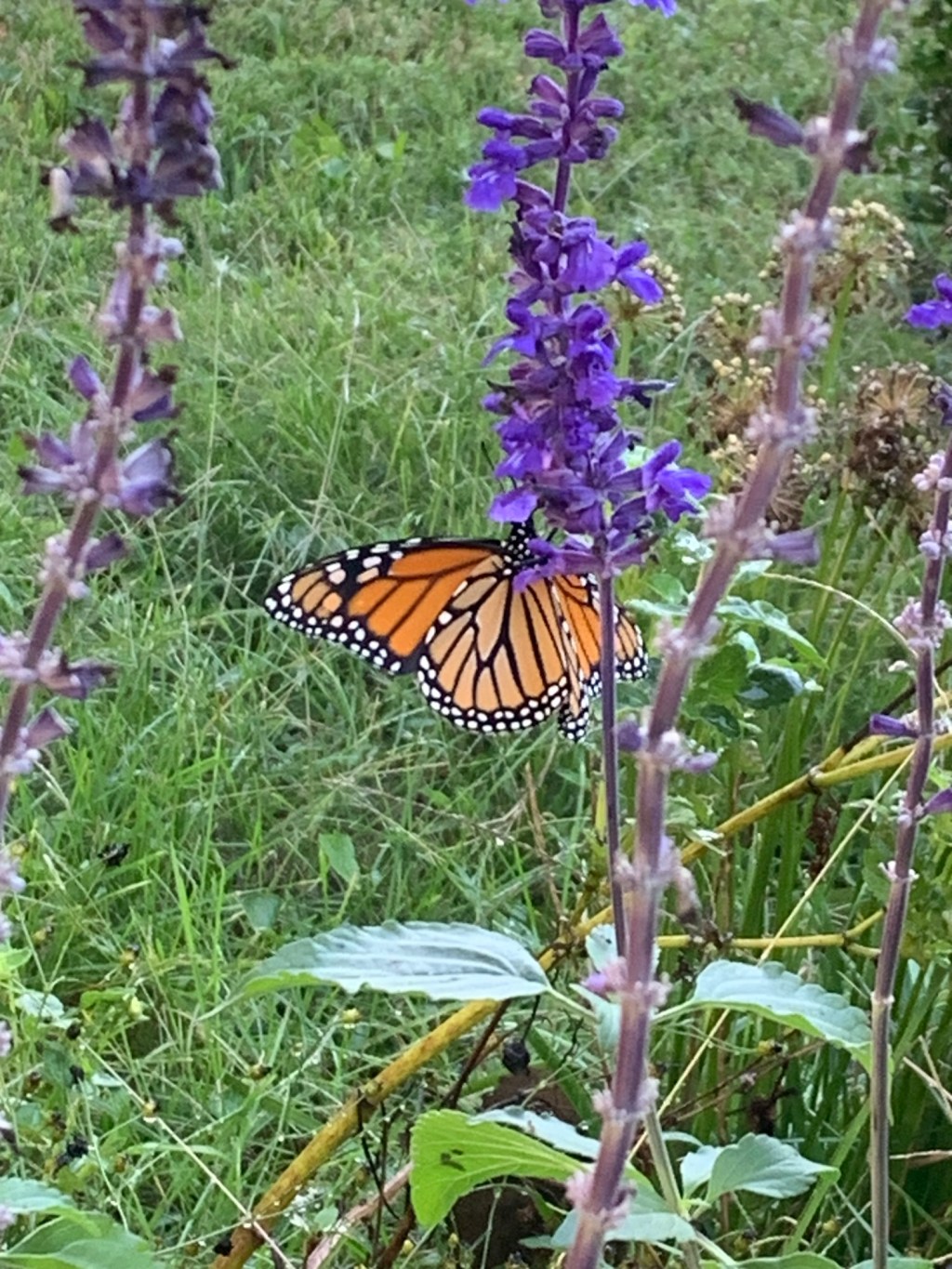
    They weren’t even on my milkweed!

    One was sitting on an annual blue salvia that I had planted in that same flower bed, and the other was just flitting around.

    Still, that made my day.

    I told everyone I knew the good news and even posted pictures on Facebook for everyone to see.

    Exciting!

    But I still hadn’t seen any caterpillars or eggs on my milkweed or butterfly weed.

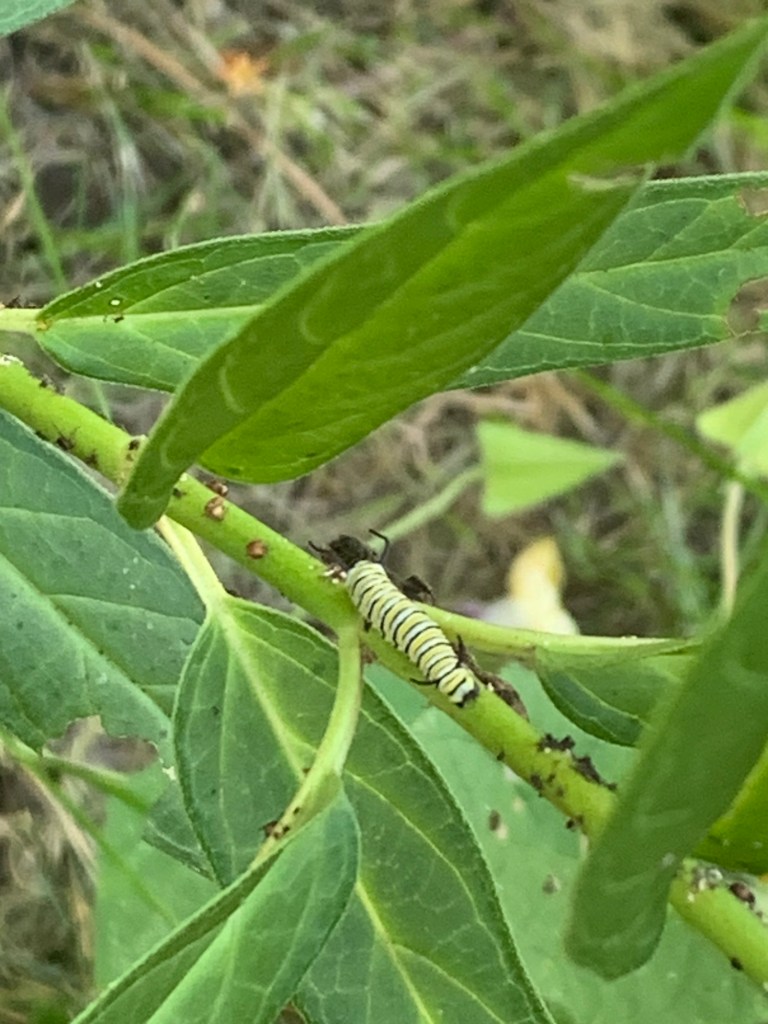
    Then one afternoon, while I was watering my garden, I saw something move.

    I looked closer at my butterfly weed.

    And there they were.

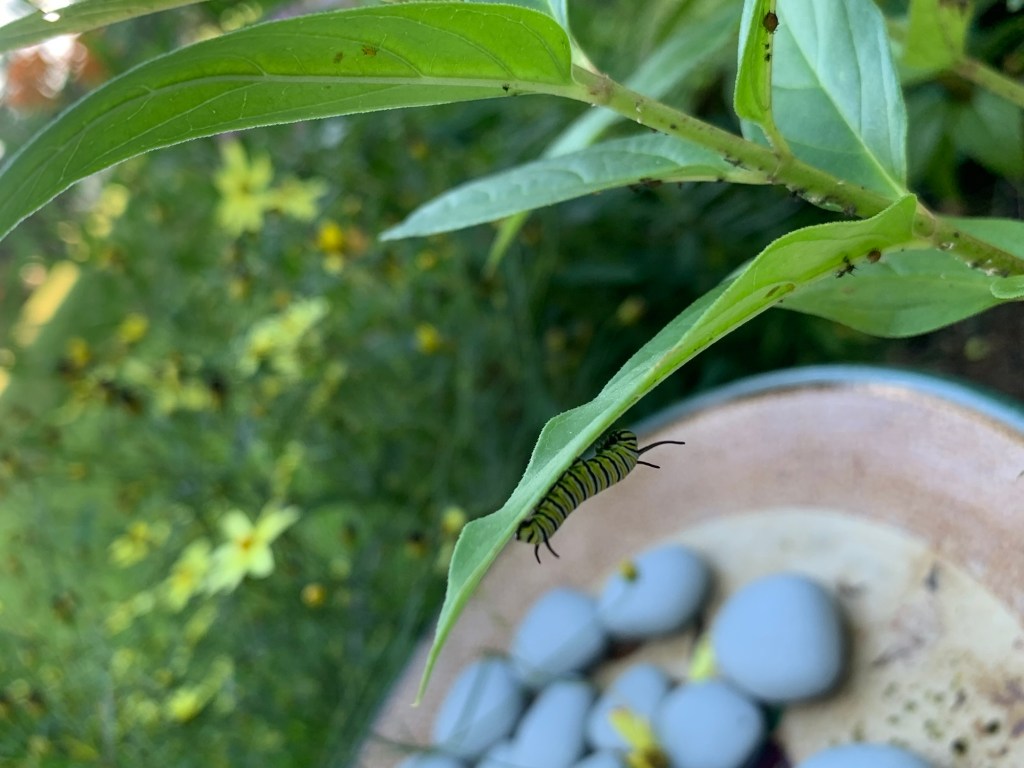
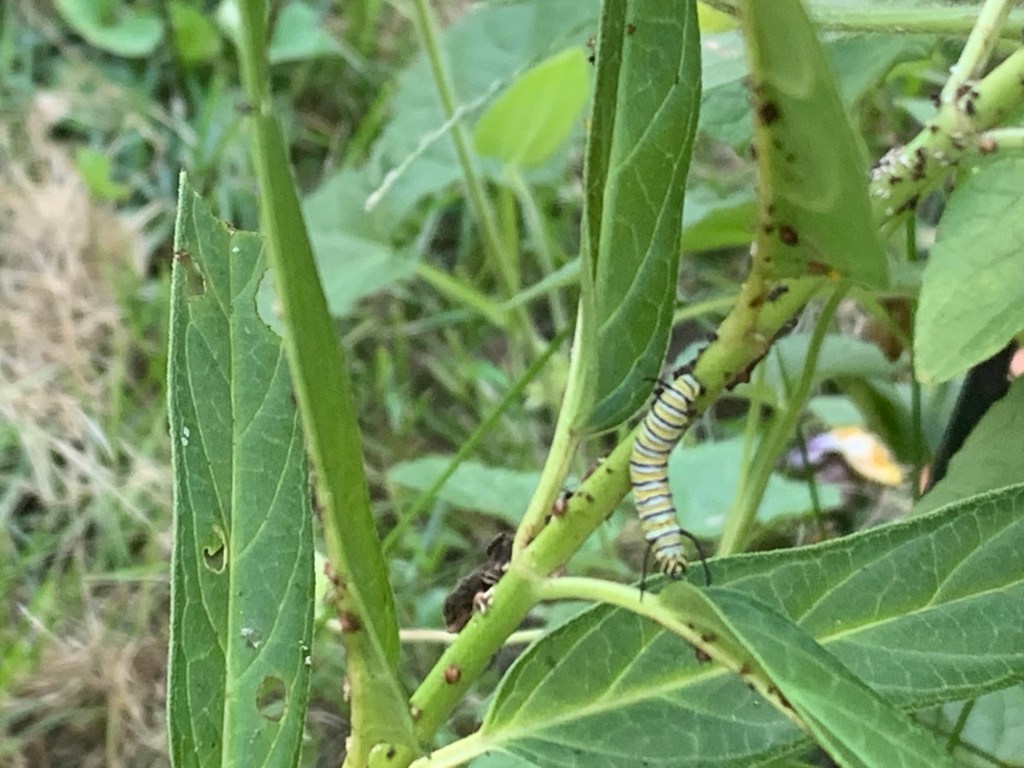
    Caterpillars.

    Of all sizes, munching away on the leaves!

    How cool!

    That’s when it dawned on me that the saying “Build it and they will come” really rings true.

    I had planted the milkweed hoping that monarchs would find it, and somehow, while I was waiting and wondering if anything would happen, they had already found it.

    I left the caterpillars where they were because I didn’t have any experience rearing them. I thought about researching how to do it, but honestly, I didn’t think I was ready for that yet.

    So I watched.

    I don’t know where some of those caterpillars ended up or whether they made it all the way to becoming monarchs. But I became attached to them—not to the point of naming them!—but I looked forward to seeing them every afternoon.

    And then some disappeared.

    Where did they go?

    I started getting curious about predators and began researching what could be eating monarch caterpillars and how I could deter them naturally.

    I learned that wasps are among the predators that can prey on monarch caterpillars. I also came across suggestions that herbs such as basil and rosemary may help deter some unwanted insects.

    So, naturally, I got some starter herbs and placed them near and around the milkweed and butterfly weed.

    And said a little prayer.

    I didn’t know if it would work.

    I was learning as I went.

    But that’s really how my garden started to grow.

    What started with a couple of milkweed plants slowly became a garden filled with plants for both monarch caterpillars and adult butterflies.

    I added more milkweed and more nectar plants. Joe-Pye weed and oxeye sunflowers filled the summer garden, and New England asters would bring something for the fall.

    And I kept seeing monarchs.

    They would flit from plant to plant, and I would find myself wondering if they were the same monarchs I had seen before or newly emerged ones.

    I still don’t know.

    But maybe that’s part of what I love about gardening.

    There is always something to notice.

    Something to wonder about.

    Something to learn.

    And for me, it all started with milkweed.

  • The garden I didn’t know I was growing

    The garden I didn’t know I was growing

    I’m the type of person who doesn’t like to just see grass—I know, I know, unpopular opinion—but I love flower beds. The less I—or I should also say, my husband—mows, the better.

    I just don’t want to see a sea of green.

    I want colors. I want flowers. I want bugs flying around. I want butterflies. I want birds stopping by. I want it to feel alive.

    So here we were in a new house about four years ago, and it was a blank slate.

    Perfect!

    I can do whatever I want.

    I didn’t have any grand flower-bed plans in mind. I just knew I wanted to transform one section of the yard into a garden.

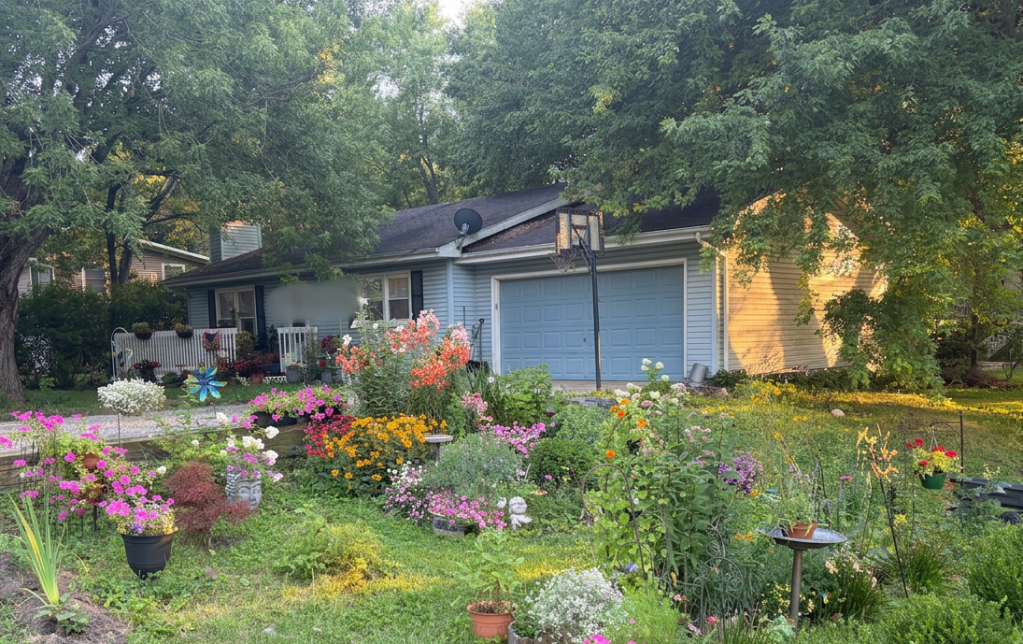
    The area I chose was a downhill slope on the side of our driveway. For the most part, it was sunny. Perfect. I could plant my Asiatic and Oriental lilies, hydrangeas, coneflowers, Black-eyed Susans, and whatever else caught my eye.

    I looked at Pinterest posts on how I should plant everything.

    Tall ones in the back. Shorter ones in the front.

    Got it.

    So my husband and I tilled the area, and then came the fun part: planting.

    My son and I planted the lily and gladiolus bulbs, then we bought some starter plants to put in the middle and front of the garden.

    Now, I don’t know about some ladies going to garden centers, but I go in there with a list in my mind.

    And once I’m there, I get so overwhelmed with all my choices that I come home with more than what’s on my list.

    And if I’m being completely honest, the plants on my list aren’t even the things I end up buying.

    So here they are, stuck with me.

    One of the things I’ve learned is that no matter how gorgeous lupines are, they will not grow in my yard.

    I tried them one year, and sadly, they didn’t come back the next year.

    I didn’t know what I did—or didn’t do—but I guess I just had to accept that, sadly, lupines weren’t meant for my yard.

    Then there were the lilies.

    One thing I didn’t anticipate was that some lilies can grow as tall as six feet, while others stay around two or three feet.

    Did I take that into consideration while my son and I were planting the bulbs?

    No.

    Of course not.

    So here they are, all coexisting beside each other, with some as tall as my husband and others short enough to be closer to my height.

    So much for tall ones in the back and short ones in the front.

    And that’s really how this garden began.

    Not with a carefully designed plan. Not with a perfectly coordinated color palette or a detailed planting map.

    Just a blank space, a shovel, a whole lot of enthusiasm, and a tendency to come home from the garden center with plants I never intended to buy.

    But somewhere along the way, something changed.

    I started paying more attention to what was happening in the garden.

    I noticed the butterflies.

    The bees moving from flower to flower.

    The birds visiting.

    The little creatures I had never really thought much about before.

    And eventually, I became especially interested in monarchs and native plants.

    I started thinking less about simply filling my garden with pretty flowers and more about creating a place where something could actually live.

    A place that could provide food for caterpillars, nectar for butterflies and bees, and a little bit of shelter for the creatures that make a garden feel alive.

    My garden is far from perfect.

    There are plants that didn’t make it. Plants that grew much bigger than I expected. Areas that don’t get enough sun. Areas that get too much water. And plenty of things I’m still trying to figure out.

    But I think that’s what makes gardening interesting.

    A garden is never really finished.

    There is always something to learn, something unexpected to discover, and occasionally, something that comes back when you were sure it wouldn’t.

    So that’s what I’ll be sharing here.

    Not a perfectly landscaped garden, but a garden in progress.

    I’ll share the plants I’m growing, the butterflies and other visitors that find their way here, the things I’m learning about native plants and creating a more welcoming habitat, and, undoubtedly, some of my gardening mistakes along the way.

    Because if I’ve learned anything in these past four years, it’s that gardening doesn’t always go according to plan.

    And maybe that’s the best part.

    What started as a simple attempt to get rid of some grass has turned into something I never really expected—a little corner of the world that feels more alive every year.

    And I think that’s a pretty good place to begin.

    How it started